
























For years, the smartphone industry has operated on a cycle of planned obsolescence, where sleek glass and aluminum frames are held together by industrial adhesives and microscopic screws designed to keep users out. Most consumers have simply accepted that a cracked screen or a dying battery often means spending hundreds of dollars for a professional repair or, more commonly, buying a brand new device altogether. However, Dutch company Fairphone is challenging this status quo with the launch of the Fairphone Gen 6+, a device designed explicitly to be taken apart.
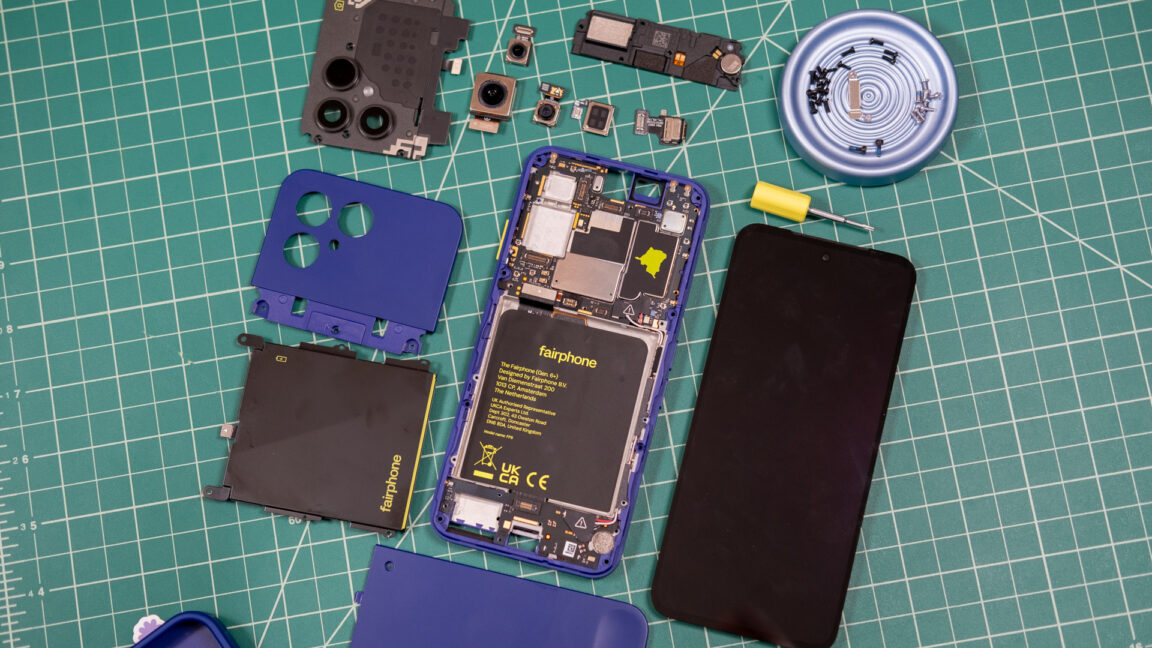
According to Chief Technology Officer Chandler Hatton, the goal is to move away from the typical disposable nature of electronics and give users true ownership of their hardware. While giants like Apple and Samsung have extended their software support windows, the physical durability of their phones rarely matches that promise. Fairphone takes a different path by prioritizing modularity. Instead of a glued-together sandwich of components, the Gen 6+ features an orderly interior where twelve different parts can be replaced using nothing more than a single T5 Torx screwdriver.
This commitment to repairability does come with certain compromises. Because it avoids heavy glues and utilizes modular slots, the phone is slightly thicker than its competitors and relies more on plastic than premium metals. Yet for Fairphone, these trade-offs are necessary steps toward sustainability. The company focuses on sourcing conflict-free minerals and ensuring fair wages for workers, tracking success not by how many units they sell each year, but by whether customers can keep a single device in their pocket for at least five years.
In practice, the ease of maintenance is striking compared to traditional flagship phones. A novice user can fully disassemble the device in roughly twenty minutes following simple documentation. From replacing an aging battery after three years to swapping out a damaged USB-C port or OLED screen, the process involves popping off connectors rather than fighting through layers of adhesive. By treating the smartphone as a tool meant to be maintained rather than a luxury item meant to be replaced, Fairphone is attempting to prove that ethical engineering is not only possible but practical for the average consumer entering the US market.