

























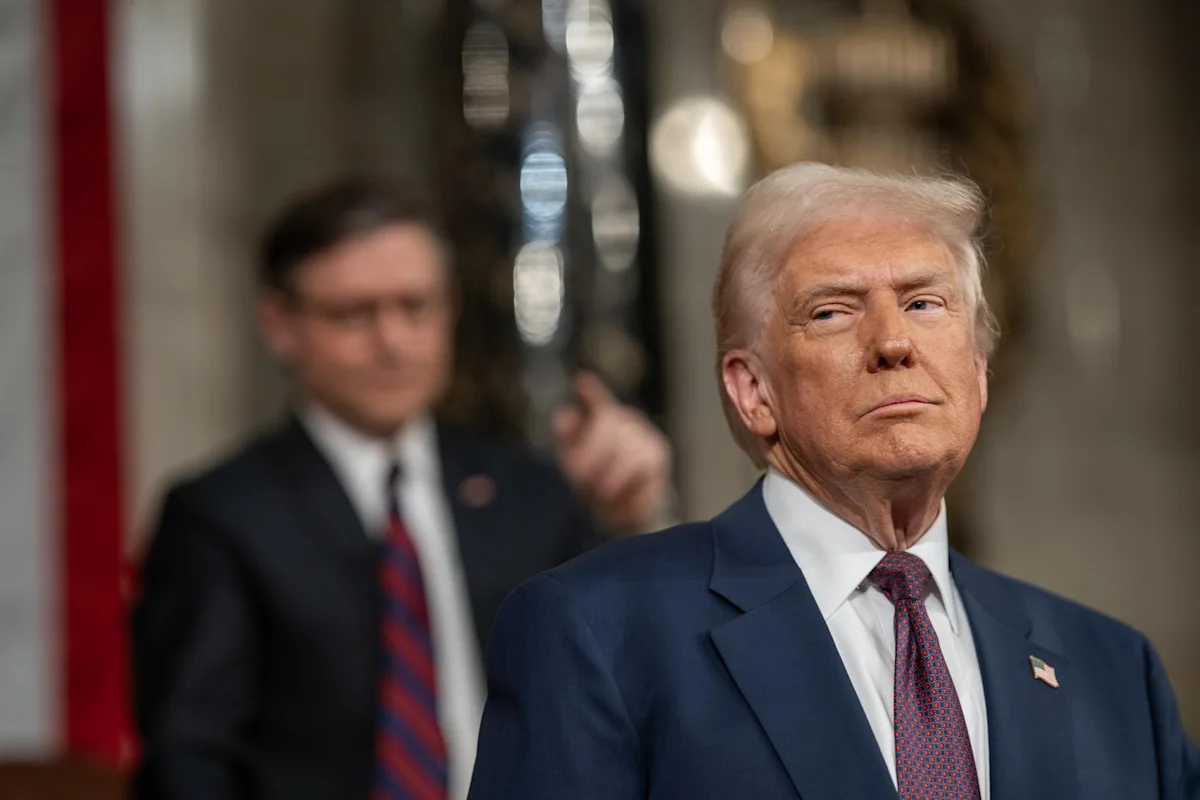
Investors are increasingly anxious about whether a split Congress could trigger a stock market plunge during President Donald Trump’s second term. With the November 3 midterm elections approaching, the prospect of losing a unified government looms large. Historically, sitting presidents struggle to keep their legislative majorities during midterms, with the party in power losing House seats in eighteen of the last twenty cycles since World War II. Current prediction markets reflect this trend, showing only a small fraction of bettors believe Republicans will maintain control over both chambers.
The concern stems from the fact that a unified government typically makes it much easier for a president to push through sweeping economic policies. A prime example was the Tax Cuts and Jobs Act passed early in Trump’s first term, which slashed corporate tax rates and fueled massive share buybacks. If Democrats seize control of either house, those kinds of aggressive fiscal maneuvers become far more difficult to implement, potentially slowing down certain drivers of business growth.
However, history suggests that investors might be worrying too much. Since the late 1890s, roughly three quarters of all presidential terms have seen the stock market deliver positive gains regardless of who controls Congress. Furthermore, many recent surges in indices like the S&P 500 and Nasdaq have been driven by technological breakthroughs in artificial intelligence rather than political wins in Washington. While fiscal policy certainly plays a role in long term stability, the broader trajectory of the market often transcends partisan gridlock on Capitol Hill.