























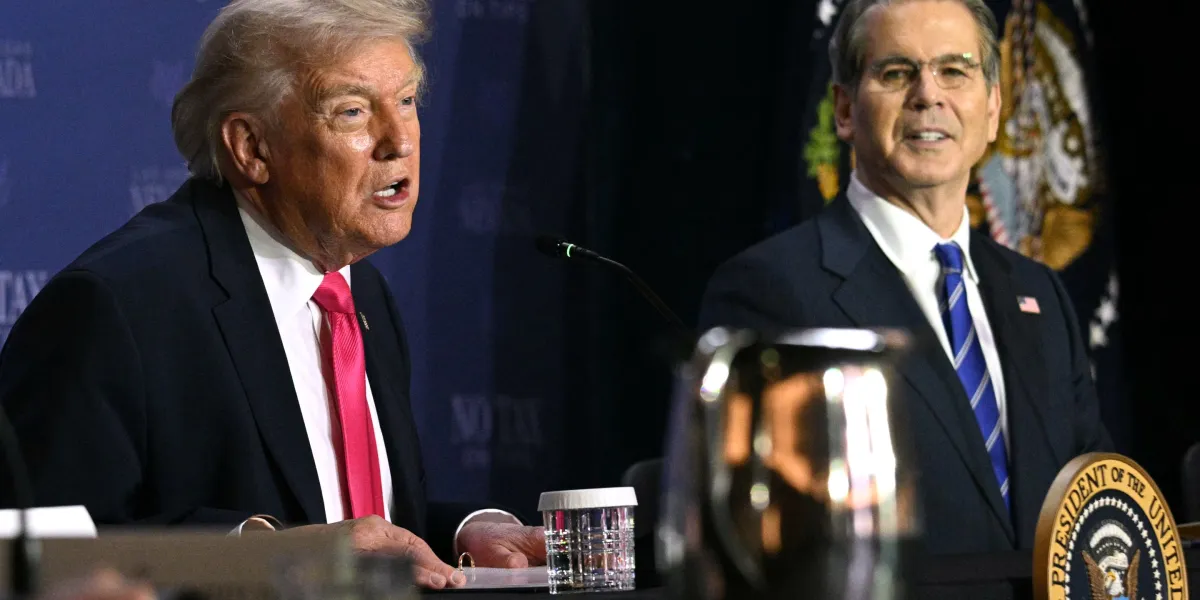
A striking disparity in investment behavior has emerged between President Donald Trump and his Treasury Secretary, Scott Bessent, according to recent ethics filings. New data reveals that Trump’s accounts executed 1,156 transactions in the single month of July alone, encompassing hundreds of purchases and sales. This staggering volume dwarfs the activity of Bessent, a seasoned Wall Street veteran who reported only 29 transactions across the entirety of last year. While Bessent focused primarily on divesting assets to avoid conflicts of interest upon joining the administration, Trump’s portfolio remained aggressively active.
Financial analysts estimate that the President’s July trades represented anywhere from 79 million to 270 million dollars. The White House has defended this high frequency of trading by explaining that these assets are managed via a trust overseen by the President’s children. Specifically, spokespeople noted that much of the activity stems from computer based model portfolios designed to automatically replicate major market indexes rather than manual picks by the President himself. Despite these explanations, critics argue that maintaining such an active portfolio is highly unconventional for a sitting head of state.
Ethics experts point out that since 1978, most presidents have utilized blind trusts or stuck to diversified mutual funds to avoid any appearance of impropriety. Former Office of Government Ethics director Walter Shaub previously suggested that such arrangements fall short of historical presidential standards. These concerns have been echoed by political opponents like Senator Elizabeth Warren and Representative Robert Garcia, who questioned whether the timing and scale of these trades could potentially benefit from non public government information or presidential influence over the markets.
Interestingly, this internal contrast comes as the Trump administration pushes for stricter rules elsewhere in Washington. The White House recently voiced strong support for the Stop Insider Trading Act, which seeks to ban members of Congress and their immediate families from trading individual stocks while in office. However, proponents of the legislation note a significant caveat: the proposed restrictions would not extend to the president or vice president, leaving them exempt from the very limits they are advocating for their legislative colleagues.