
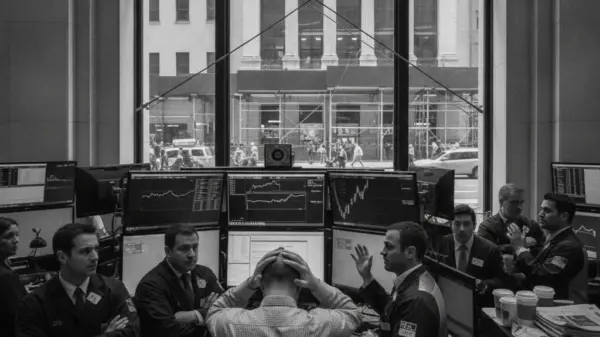

























Wall Street began a shortened trading week on a shaky note as Dow Jones Industrial Average futures tumbled 308 points, reflecting growing investor anxiety over geopolitical instability and mounting trade frictions. While the Nasdaq 100 managed to edge slightly higher, broader market sentiment remained dampened by a volatile mix of headlines. Much of the pressure stems from an intensifying conflict in the Middle East, where recent exchanges of strikes between the United States and Iran have sent shockwaves through global energy markets.
Oil prices have surged to six week highs for the third consecutive day, with Brent crude climbing toward ninety seven dollars per barrel. This spike has triggered fears among investors that elevated energy costs will fuel further inflation, subsequently pushing Treasury yields higher. Market analysts warn that these conditions create a difficult environment for equities, especially as traders look ahead to upcoming central bank meetings and critical inflation data scheduled for later this week. There is currently a significant possibility that the Federal Reserve may opt for another rate hike to combat persistent price pressures.
Adding to the uncertainty is a fresh wave of diplomatic tension between Washington and Ottawa. Trade relations have soured as Canada prepares to implement retaliatory tariffs on approximately twenty billion dollars worth of American goods starting Tuesday. President Donald Trump heightened the friction via social media, specifically targeting Canadian aircraft manufacturer Bombardier by suggesting the company would be barred from selling in the U.S. unless production shifted domestically.
Meanwhile, across the Pacific, Asian markets showed a fragmented response to the turmoil. While South Korea saw notable gains and China’s CSI 300 jumped significantly, other indices like Japan’s Nikkei struggled under the weight of rising oil costs and shifting currency dynamics. The Japanese yen has strengthened toward its highest levels since February following hawkish signals from the Bank of Japan, adding another layer of complexity for global portfolio managers navigating an increasingly unpredictable economic landscape.