






















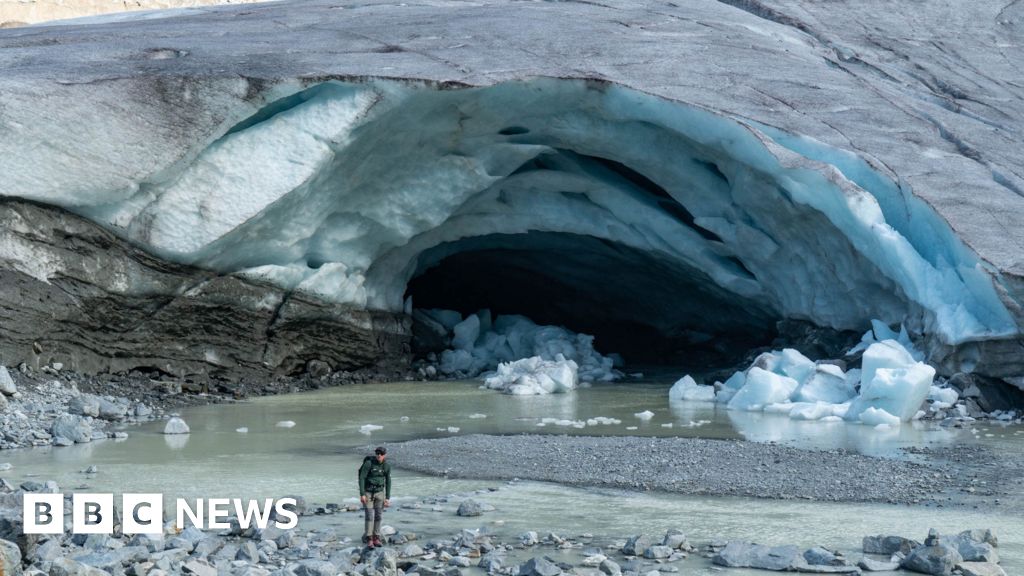
Switzerland’s iconic Alpine peaks are witnessing a collapse of ice at a rate that experts describe as nothing short of disastrous. New data reveals that the country lost more than five percent of its remaining glacier ice in just twelve months, a figure that dwarfs previous benchmarks for extreme loss. While glaciologists once viewed a two percent annual decline as severe, the current pace of melting suggests a tipping point has been reached, driven by relentless summer heatwaves and a lack of protective winter snowfall.
The crisis began before the summer heat even arrived, as a mild winter left the mountains with thin snow cover. Because bare ice is darker than fresh snow, it absorbs significantly more solar energy, creating a vicious cycle that accelerated melting throughout the season. Researchers noted an ominous trend at altitudes as high as 3,500 meters, where areas usually buried under deep snow were stripped bare. Without this seasonal accumulation to replenish them, glaciers are effectively starving and shrinking from both the bottom and the top.
While the immediate result has been a massive surge in meltwater—estimated at 2.2 trillion liters between July and September—scientists warn this provides a false sense of security. This runoff acts as an emergency reserve of ancient water stored over centuries; using it now to support hydropower, farming, and shipping means those reserves will not be available during future droughts. Beyond water scarcity, the rapid disappearance of ice threatens to destabilize mountain slopes, increasing the likelihood of catastrophic landslides and flash floods.
Dr. Matthias Huss of Glacier Monitoring Switzerland emphasizes that while some small glaciers have already vanished entirely, aggressive cuts to carbon emissions could still protect larger ice masses globally. Saving glaciers in regions like the Himalayas and the poles remains critical not only for local ecosystems but for stabilizing global sea levels. For now however, the situation in the Alps serves as a stark visual reminder of climate change in real time, described by one expert as watching an ice cube melt rapidly after being taken out of the freezer.