
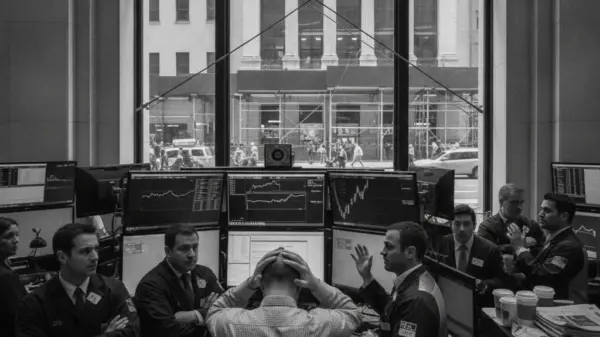





















Investors often assume that sticking to domestic stocks is a safe way to avoid the chaos of international politics, but a new report reveals that American portfolios are far more entangled in global conflicts than they appear. Researchers Matteo Crosignani, Lina Han, and Marco Macchiavelli have identified a growing phenomenon called geoeconomic risk, where companies lose value when governments use trade or financial leverage for political goals. Even if an investor never buys a single foreign share, they may still be heavily exposed to these risks through the complex web of global supply chains and overseas customers that sustain many U.S. corporations.
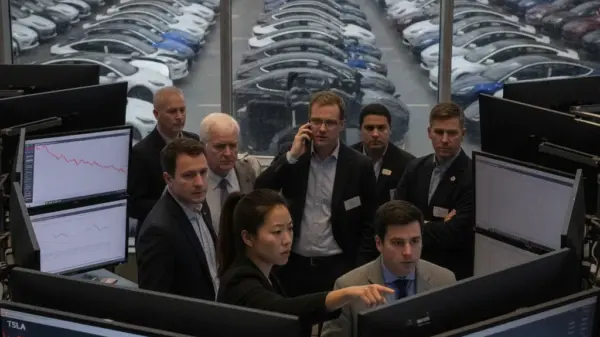
The researchers focused specifically on the ongoing technological rivalry between the United States and China, using export controls imposed by the Department of Commerce as a primary case study. When the U.S. government adds a Chinese entity to an export control list for national security reasons, it does not just hurt the targeted company in China; it creates a ripple effect that hits its American suppliers. By analyzing over 5,000 mutual funds from 2010 to 2023, the team found that roughly 20 percent of domestic fund assets are tied to U.S. firms with Chinese customers, with some science and technology funds seeing that figure climb as high as 43 percent.
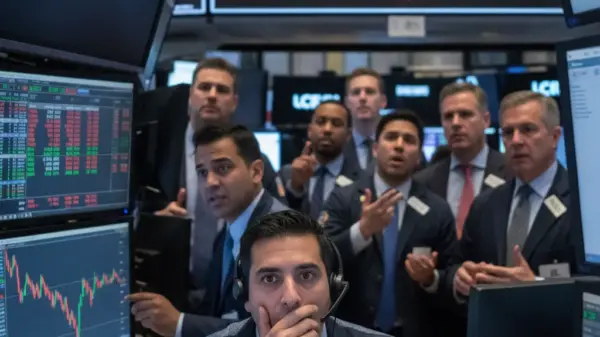
These geopolitical shocks lead to immediate and measurable financial pain for shareholders. Data shows that U.S. suppliers typically see their stock prices drop by about 3.6 percent shortly after their Chinese partners are hit with sanctions. Because so many different companies rely on similar international partnerships, this type of risk is incredibly difficult for investors to diversify away. It acts as a systemic drag on performance rather than an isolated incident affecting just one business, leading to increased volatility and lower overall returns for highly exposed funds.
In response to these pressures, active fund managers are increasingly treating geoeconomic instability as a permanent threat rather than a temporary dip in pricing. After export controls are announced, managers tend to aggressively rebalance their portfolios by selling off affected suppliers and other China linked firms regardless of whether those specific companies were named in the latest order. This shift suggests that professional investors now view geopolitical friction as a fundamental driver of market value and are proactively scrubbing their holdings to protect against future diplomatic fallout.