

















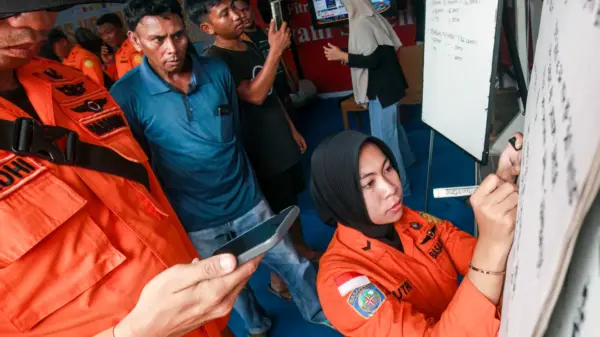


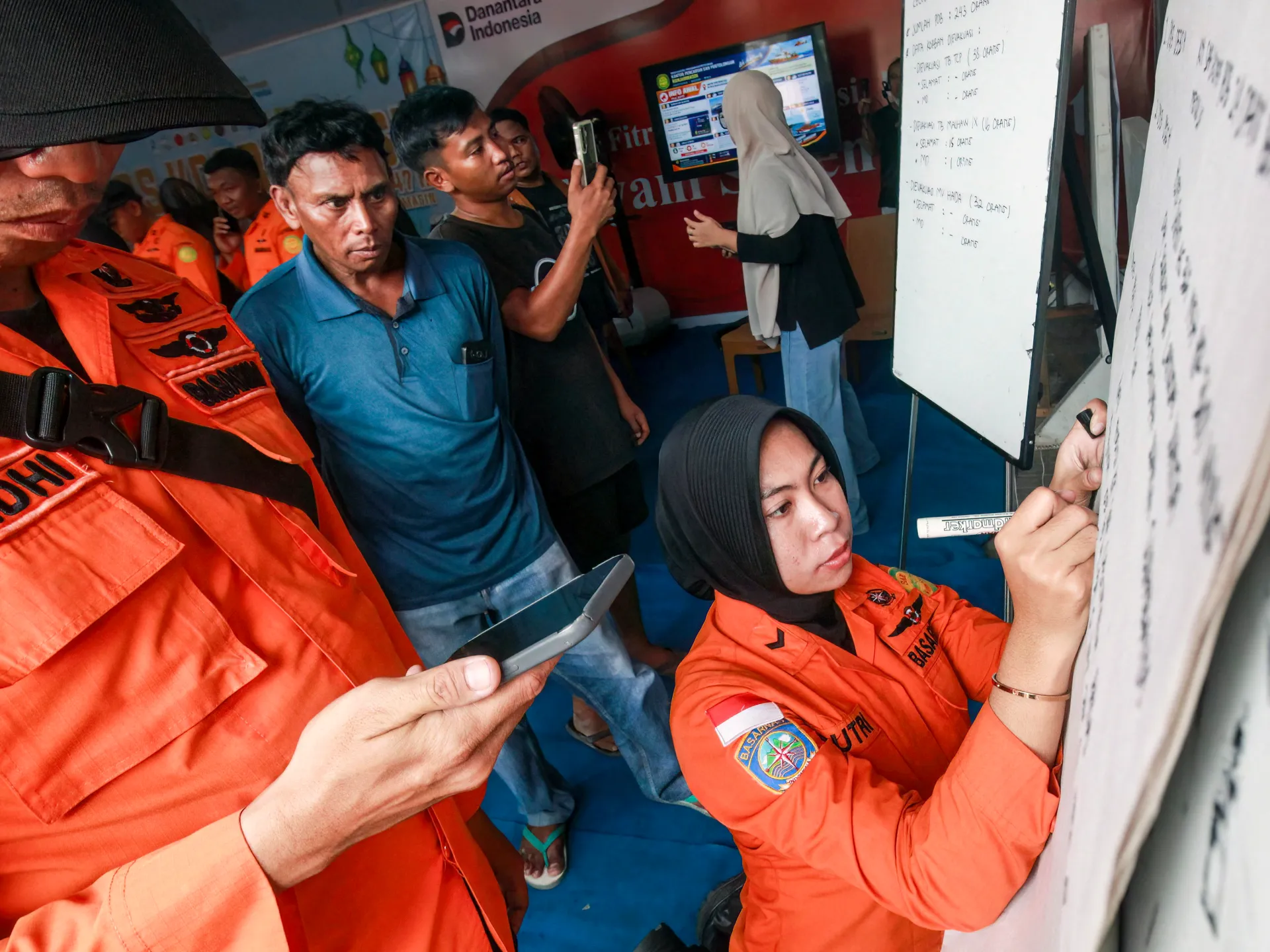
A massive search and rescue operation is underway in the Java Sea after the Virgo Transport 8 passenger ferry capsized, leaving six people dead and 130 others missing. The vessel, which was carrying a total of 243 passengers and crew, vanished from radar in the early hours of Sunday morning while traveling from Surabaya on the island of Java toward the port city of Banjarmasin on Borneo. According to Basarnas, Indonesia’s national search and rescue agency, 107 individuals have been successfully rescued so far.
Local officials believe that treacherous weather conditions played a significant role in the disaster. I Putu Sudayana, head of the Banjarmasin search-and-rescue office, noted that rescuers are battling waves reaching heights of over eight feet, making the recovery effort incredibly dangerous. He warned that even large specialized rescue vessels are facing extreme risks due to the volatile sea state around the wreckage site, which sits roughly 81 nautical miles from shore.
While initial reports point to rough seas, Indonesian authorities have launched a full investigation into the exact cause of the sinking. Investigators are currently looking into whether technical failures contributed to the tragedy alongside the inclement weather. This incident highlights a recurring danger for residents across Indonesia’s vast archipelago of 17,000 islands, where many depend on affordable ferry travel despite frequent accidents involving maritime safety.
This latest catastrophe follows a string of recent tragedies at sea throughout the region. Just last month, a fire broke out on a ferry traveling between Bali and Lombok resulting in casualties, while another vessel carrying dozens of people sank near Selayar Island back in July. As helicopters and ships continue to scour the waters for survivors, these events have once again sparked urgent conversations regarding shipping safety standards in some of the world’s busiest waterways.