







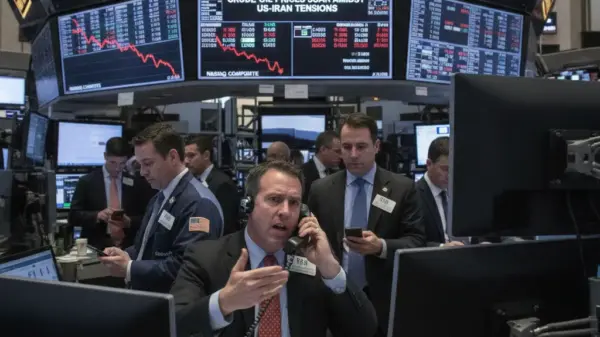


















Investors are currently staring at a puzzling contradiction regarding The Trade Desk. On paper, the advertising technology firm looks like an absolute powerhouse, functioning as a cash machine that consistently outperforms market averages. With positive free cash flow for three consecutive years and a net cash position of 1.1 billion dollars, the company’s balance sheet is remarkably clean. Yet, despite these strengths, the stock has plummeted 72 percent over the last year, trading around 14.43 dollars. It creates a strange scenario where the market is essentially offering a highly profitable business at a deep discount, leaving analysts to wonder if they have found a bargain or if the company is fundamentally broken.
The reason for this steep markdown comes down to one word: growth. After years of aggressive expansion, The Trade Desk hit a wall in the second quarter, seeing revenue grow by just 3 percent year over year. Management has been candid about missing their own expectations and lowering guidance for the third quarter. Much of this slump is tied to macroeconomic pressure hitting key sectors like automotive and consumer packaged goods, which make up a quarter of their business. There is a growing fear among investors that during lean economic times, big brands stop paying for premium, data-driven placements and instead pivot toward cheaper, simpler media options.
However, looking closer reveals that the narrative might not be entirely bleak. While headline numbers are struggling, there are pockets of explosive growth elsewhere. International markets in Europe and Asia are climbing nearly 30 percent year to date, and smaller advertisers are flocking to the platform at rates exceeding 50 percent. Perhaps most importantly, revenue from Joint Business Plans with the company’s largest strategic partners is growing six times faster than overall revenue. This suggest that while casual users may be cutting costs, the most committed clients are actually doubling down on The Trade Desk’s ecosystem.
Ultimately, the stock represents a classic tug-of-war between current headwinds and underlying quality. If those long-term strategic partnerships continue to expand rapidly regardless of cyclical storms, the current share price could look like a massive oversight by the market. For now, The Trade Desk remains a compelling case study in how quickly investor sentiment can shift from euphoria to skepticism when growth stalls, even when the actual cash generation remains robustly intact.