























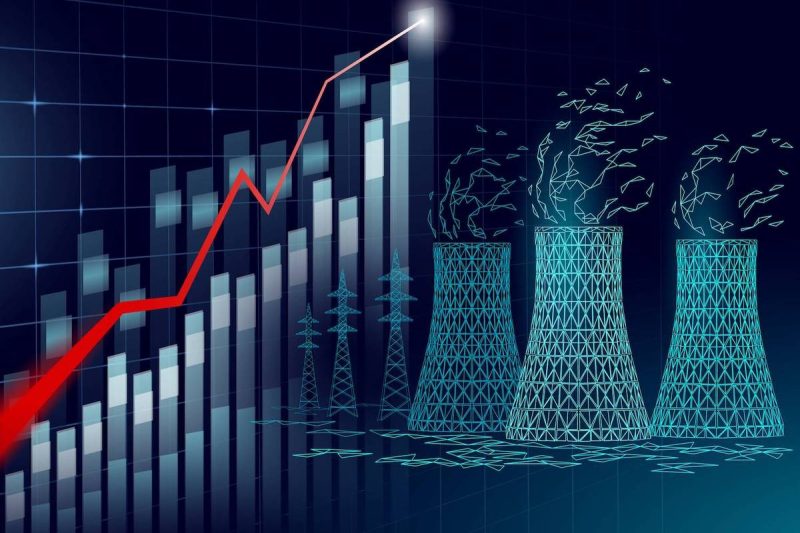
Uranium prices surged back above US$100 a pound this week, extending a year-long rally that is reshaping the uranium market after more than a decade of underinvestment.
Spot price of uranium climbed US$7.75 to US$101 a pound after the Sprott Physical Uranium Trust (TSX:U.U,OTCQX:SRUUF,OTCQX:SRUUF) disclosed it had purchased 500,000 pounds of uranium and raised US$214 million through a share issuance, lifting its available cash to US$323 million.
Expectations that the fund will deploy that capital rapidly into further uranium purchases helped push prices back above the psychologically important US$100 mark, a level not consistently seen since 2007.
“Sprott has now built a pretty serious war chest to buy some pounds, so it’s come into this year preloaded with cash,” Guy Keller, portfolio manager of Tribeca’s Nuclear Energy Opportunities Strategy, told the Australian Financial Review.
“We’ve now entered a new range for the spot price and I think it’s safe to say that US$100 a pound is a new floor which should hold for the next 12 months and the next question is, where does it stop?”
Spot prices catch up to contract reality
Spot uranium one-year price performance.
Chart via Trading Economics
While the move above US$100 grabbed headlines, there have already been previous remarks that claimed uranium has already been trading at triple-digit prices away from public benchmarks.
Earlier this January, Cameco (TSX:CCO,NYSE:CCJ) president and chief operating officer Grant Isaac told the Goldman Sachs Energy, CleanTech & Utilities Conference that most new uranium contracts already imply prices well above published spot levels.
“We’ve had market-related contracts with floors, escalated floors in the mid-70s. We’ve had ceilings as high as US$150 escalated,” Isaac said. “The midpoint between those floors and the ceilings are already US$100 uranium, US$115 uranium.”
Isaac said around 70 percent of uranium contracting last year occurred through market-related agreements that are not fully reflected in reported benchmarks. This meant that utilities are already budgeting for significantly higher prices than spot data suggests.
He also warned that conventional demand forecasts materially understate future uranium needs, as they exclude reactors that have not yet reached final investment decision.
“The demand forecast that most have out there… we believe they’re actually understating demand,” he said, pointing to new build programs in the US, Eastern Europe and Asia, as well as rising electricity demand from data centers and artificial intelligence infrastructure.
Sovereign contracting is also returning as a market force. Isaac referenced reports from last year that Canada and India are close to finalizing a 10-year uranium supply agreement with Cameco worth US$2.8 billion.
Supply deficit setting up a “breakout year”
The price rally also supports growing consensus that uranium supply cannot respond quickly enough to rising demand.
A research report published this week by Teniz Capital said the global uranium market has entered a structural deficit phase that cannot be resolved within the next decade.
The firm argued that the long lead times required to bring new uranium projects into production—often 10 to 20 years from discovery to first output—mean that supply shortages expected in the 2030s are already effectively locked in.
“The supply deficit in the 2030s is already programmed,” the report said, describing the current market as having reached a “tipping point” where utilities that fail to secure long-term contracts today risk facing acute shortages later in the decade.
The report estimates global uranium demand to rise by about 28 percent by 2030 and more than double by 2040, driven by reactor construction in China and India, renewed Western support for nuclear power, and rapidly rising electricity demand from data centers and AI infrastructure.
David Franklyn, portfolio manager at Argonaut, also believes uranium could be heading for a “breakout year”.
“We believe the demand-supply balance has continued to improve with most major global economies now looking for nuclear power to be a component of their base load power mix,” Franklyn remarked.
Securities Disclosure: I, Giann Liguid, hold no direct investment interest in any company mentioned in this article.